About the artist
I am the maker behind Cast & Purl, and I have had wool in my hands for as long as I can remember.
I write every pattern the way I wish patterns had been written for me: stitch by stitch, with the gauge, yarn weight and finishing notes stated plainly, and a filmed tutorial for the rows that are easier to watch than to read. Knitting and crochet both live here, side by side, because I have never been able to choose between the needles and the hook.

How Cast & Purl Began
It started with a borrowed pair of needles and a neighbour who refused to let me quit halfway through a sleeve.
Her name was Mirjam, and she taught me to read a cable chart before she taught me to cast on properly. That order was deliberate. She wanted me to see the structure first, so the stitches would feel like a decision rather than a guess.
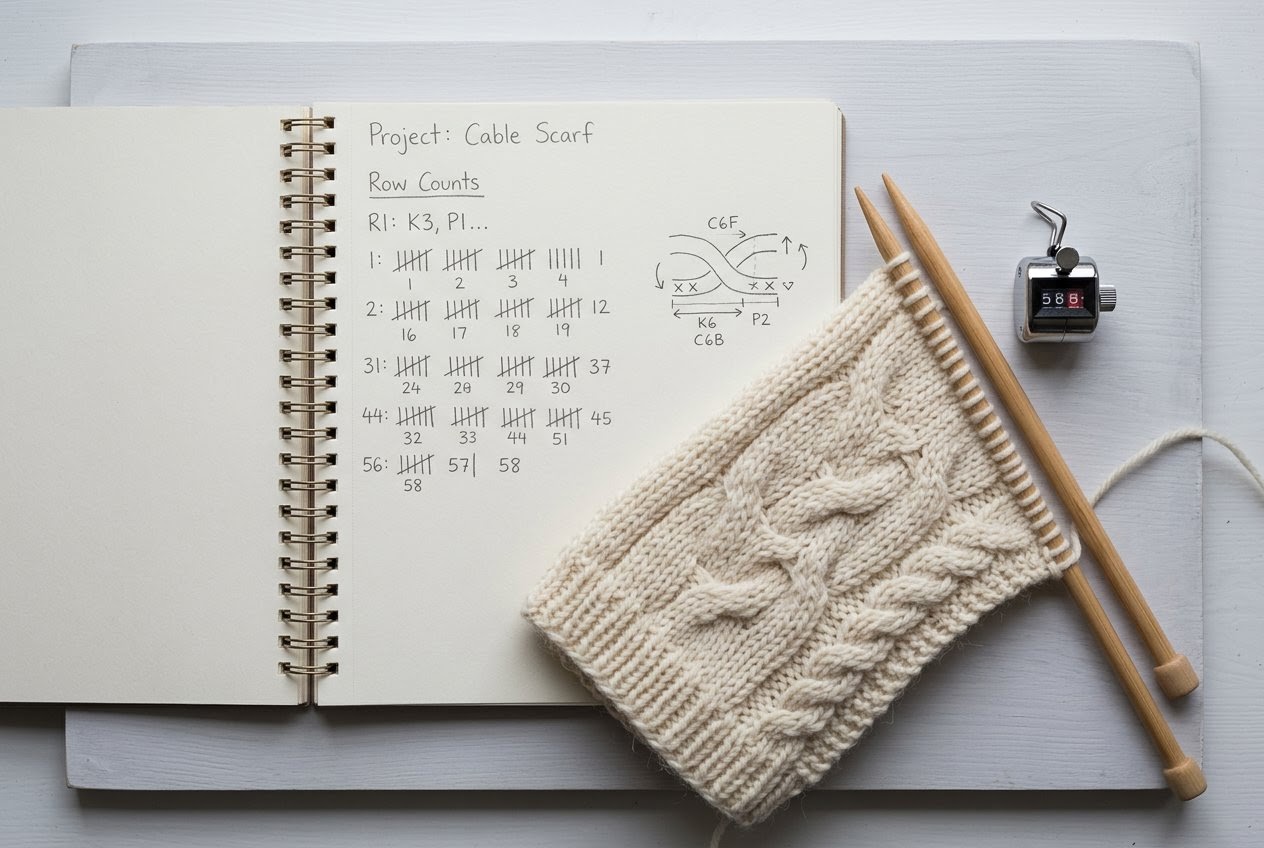
Years later I was reworking a top-down raglan for the third time, filling a notebook with crossed-out row counts. The turning point was small: I rewrote my own scribbles as a clean, numbered pattern, and a friend knit it correctly on the first try. That was the moment the writing became the work.
Cast & Purl is where those written patterns live, each one paired with a filmed walkthrough for the rows that are easier shown than described. Knitting and crochet are kept in their own places, so you can find a project, follow it at your pace, and come back to it whenever you like.
The work on the needles
Two hands, two grammars
Worsted and DK wool, mostly undyed or plant-dyed, worked in long uninterrupted runs.
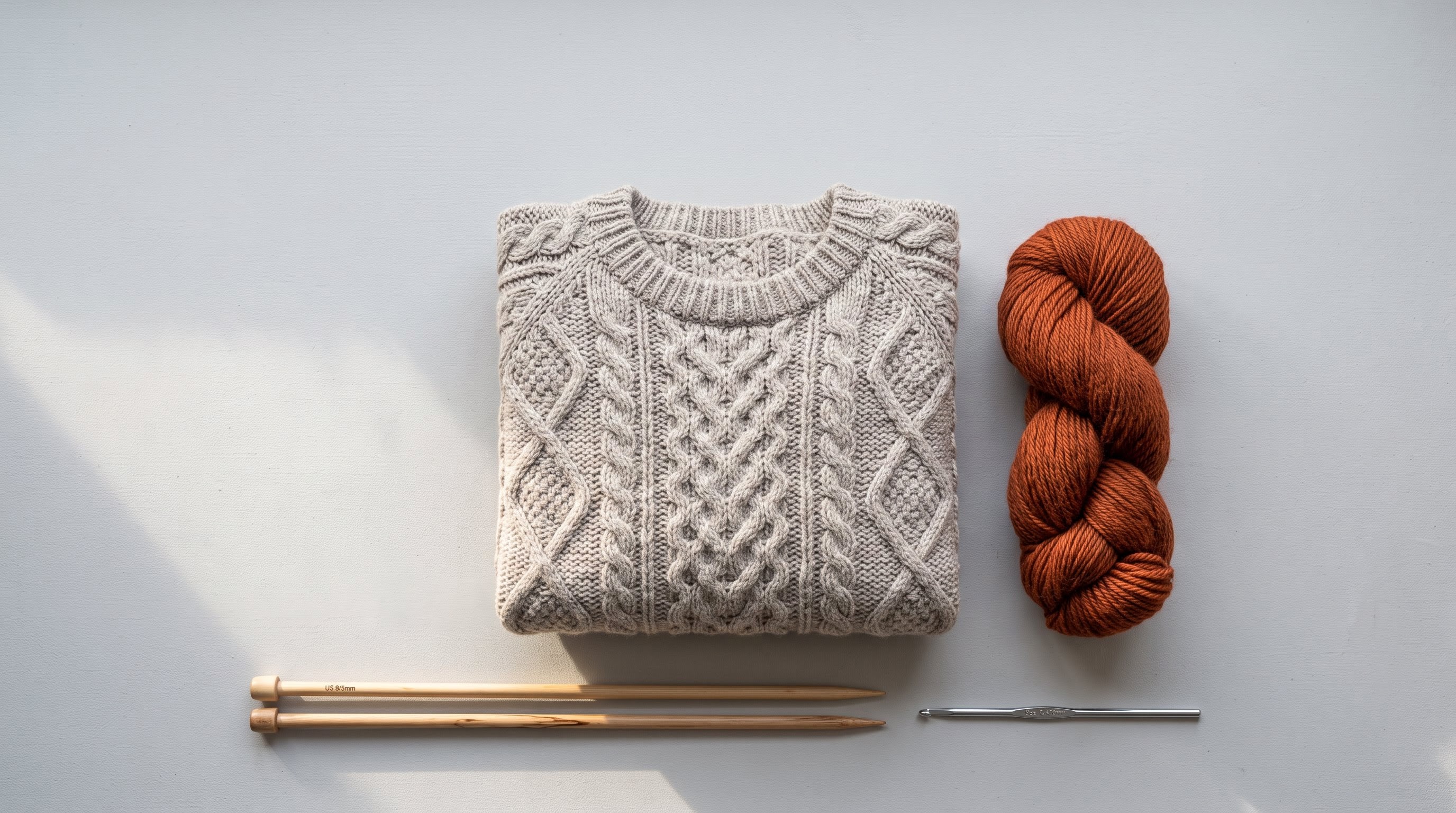
Knitting here means seamless construction: yokes worked in the round from the neck down, sleeves picked up and run to the cuff, and shaping that hides itself inside a cable or a raglan line rather than announcing itself at a seam. I favour sturdy woollen-spun yarn with some spring to it, because a fabric that holds its own shape forgives a looser hand and wears for years rather than seasons. Texture does the decorating — a travelling cable, a slipped-stitch column, a plain stocking-stitch field left deliberately quiet.
Crochet I treat as an architecture rather than a substitute for knitting. It builds outward from a point, holds an edge without blocking, and lets me put weight exactly where a piece needs it — a firm basket base, a dense granite-stitch collar, a mesh panel that stays open. The written patterns follow the same habits in both crafts: full stitch counts at every round, gauge given over a real swatch, and the fiddly part explained in words before the video shows the hands doing it.
How the teaching works
Every project here exists twice: once as a written pattern you can read at your own pace, and once as a filmed walkthrough for the rows that are easier watched than read.

Written patterns first
Each project starts as a full written pattern: yarn weight, needle or hook size, gauge, and the stitch-by-stitch instructions set out in plain rows. Nothing is held back for a video or a paid tier. The pattern stays on the site after publication, so a project you started last winter is still here in the same place when you pick it up again.
Gauge, materials and finished measurements sit at the top of every pattern page.
Video paired to the page
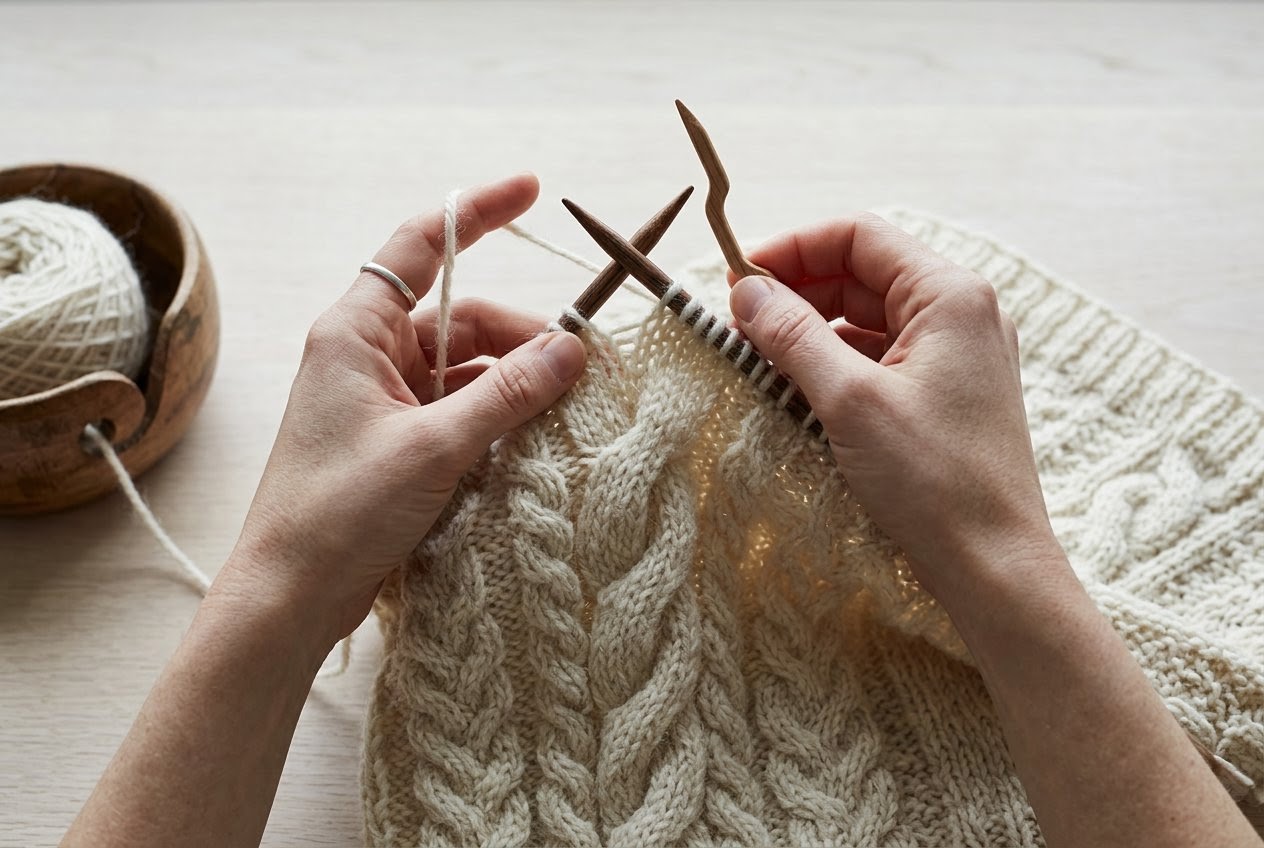
The awkward parts — a provisional cast-on, a cable crossed without a cable needle, joining in the round without a twist — are filmed close and slow. Each tutorial is tied to the pattern it belongs to, so you are never hunting for the right video, and the written steps sit beside it while you work.
Filmed over the shoulder, hands and stitch in frame, no cuts through the tricky rows.
Makers at any stage
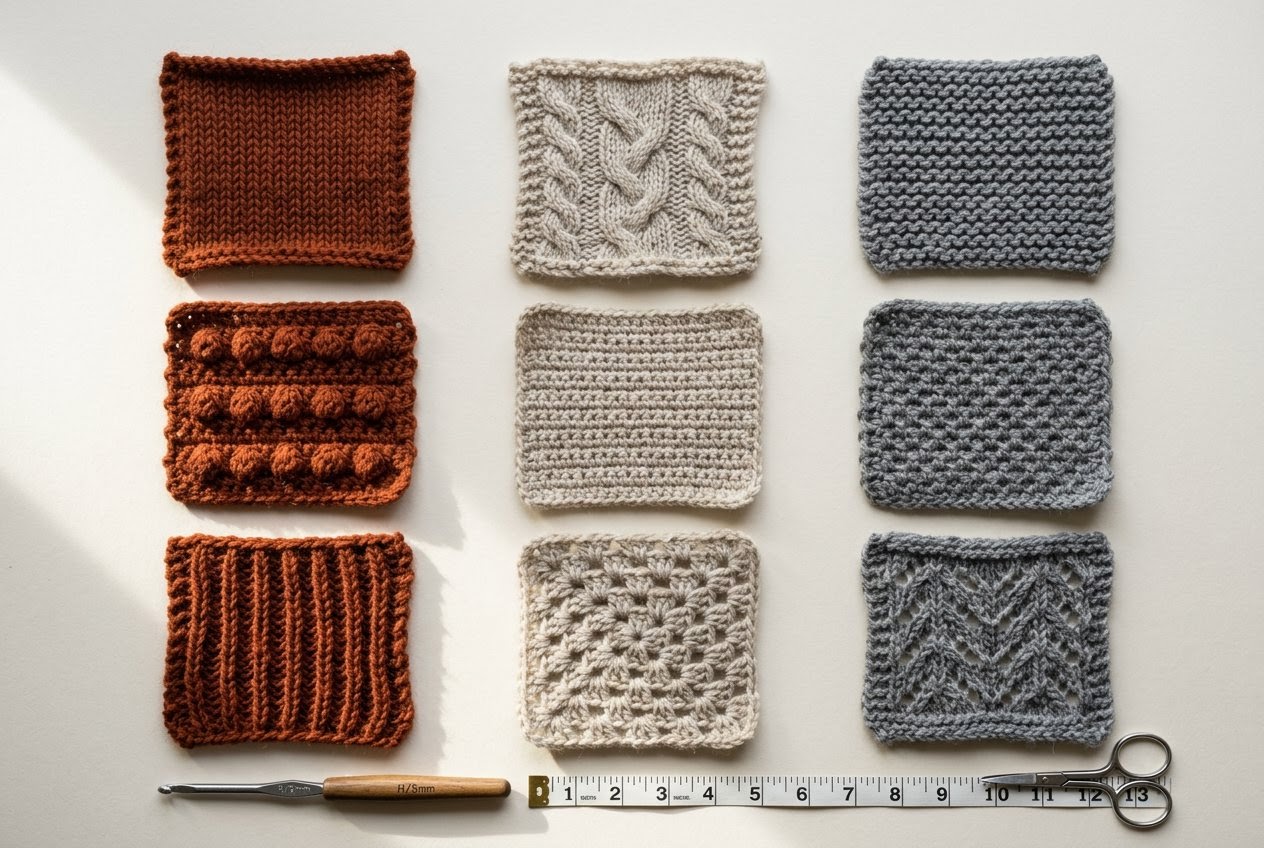
Some readers arrive to learn a single new stitch; others are three sweaters deep and want the shaping written out properly. Both are planned for. Patterns note where a simpler substitution works and where the technique is worth slowing down for, so you can build a practice rather than finish one project and stall.
Skill notes and substitutions are written into the pattern, not left to guesswork.
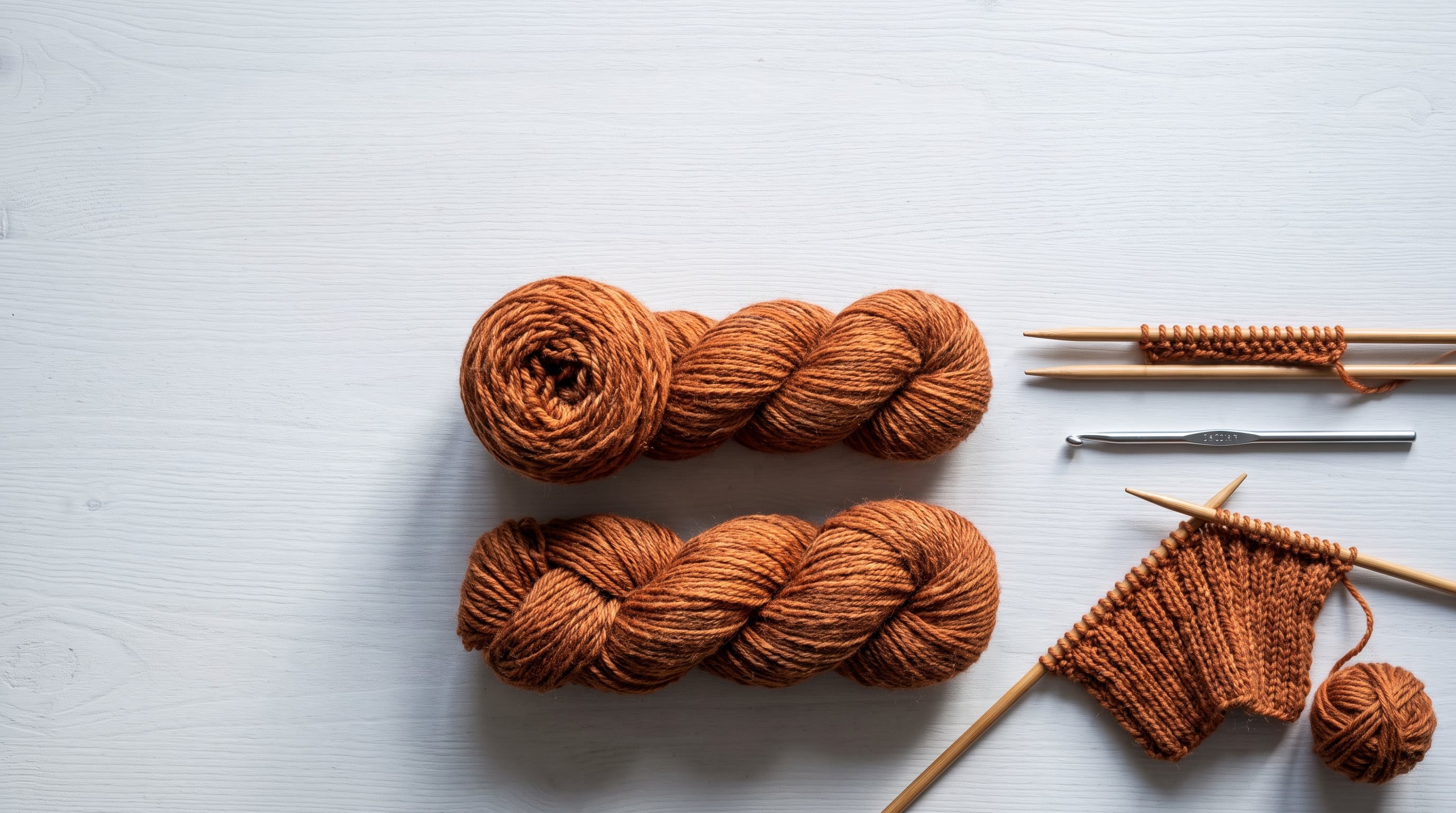
Explore and connect
The whole archive is open whenever you want it: written patterns with gauge notes, stitch counts and a video walkthrough for every tricky round. Pick a craft below, or come say hello.